Thursday, May 28, 2020

White Cloud Mountain Minnow Colony In A 100-gallon Rubbermaid Stock Tank


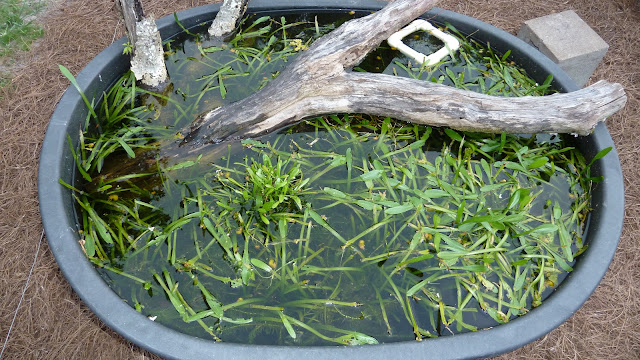
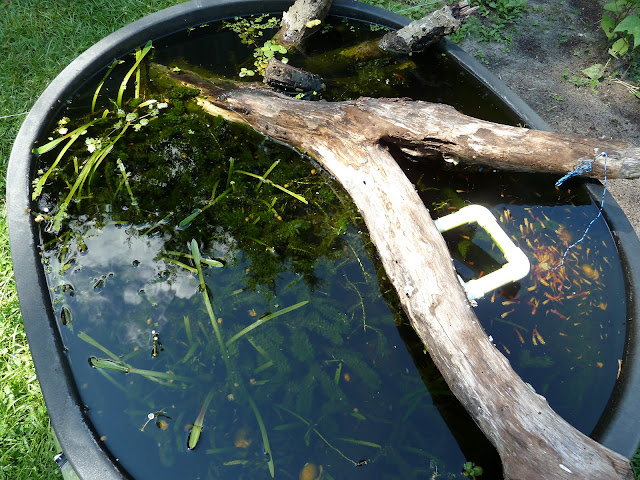
My hundred-gallon rubber made stock-tank,  Home for my Whitecloud colony. They have been outdoors in this tank for around three years. There are several sizes of fry in there now and an unknown number of adults.

The plants are mostly dwarf sagitarius. There is a large clump of java moss and a few amazon frogbit plants I reciently added. The top is covered with birdnetting to keep my resident red sholdered hawk out,

Stocking Suggestions For a 100 Gallon Stock Tank

100 Gallon Tuff Stuff Stock Tank


White clouds if you want the to survive the winter.

Comet goldfish (feeders) work and they are very cheap.

Guppies are good while the temperature is above 60 degrees. Guppies are pretty easy to catch. This is especially true if you have been feeding them.

Platies can't take the heat or the cold well. They can work, but you need to keep them in a shaded area.

You don't want direct sun if you can avoid it.

I have kept Peppered Corydoras paleatus. and albino bristle nose outside in the summer.

Light colored fish are easy to see. Goldfish or the golden white clouds for example.  Regular white clouds just about disappear in the black stock tank. Peppered Corys will vanish and not be found again until you drain the tank.

All of the zebra danios I have in my aquariums were spawned in media mixing pans outdoors like the ones you would use for mixing mortar.

There is a theme here. Hardy fish are usually the cheap ones. I would like to try some native sailfin mollies and bluefin killies. These are native to our area and should do well.

Put wire fencing over the top of the tank high enough above the water level that birds can't perch on the wire and eat you fish. I had a red shouldered hawk clean out a tank once.

Raccoons and the neighborhood kids are a real threat.

Sunday, February 2, 2020

Okefenokee Pygmy Sunfish Elassoma Okefenokee

I have pygmy sunfish. They Stay hidden most of the time and are very hard to find. If you watch all the way to the end you will see the fish almost vanish as it nears the bottom. The spots are electric blue on a dark background. The fish seem to be able to turn them on at will.  When he flares the blue areas are very bright. Very much like the blue on a neon tetra. They are tiny and like to hide in the plants and under rocks and leaves making them very difficult to catch. This adult fish is about 34/-inch long.


The Okefenokee pygmy sunfish, Elassoma Okefenokee, is a species of pygmy sunfish found in southeastern United States, where it prefers waters with dense vegetation growth in the Altamaha drainage in southern Georgia south to Lake Okeechobee, Florida, interior lake basins in north-central Florida, and upper Suwannee, Withlacoochee, and Hillsborough river drainages on the Gulf Coast of Florida. This species can reach 3.4 cm (1.3 in) in total length.

https://en.wikipedia.org/wiki/Pygmy_sunfish

I have been trying for a while now to get a colony of native fish started. I'm finally having some success. These are the least killifish (Heterandria Formosa). The smallest livebearer in the world and the smallest fish in North America. I only have one adult female but she is dropping a new fry every few days. I have four fry as of 1 Feb 2020. The adult fish is a little over 1/2 inch long.


 Heterandria formosa (known as the least killifish, mosqu or midget livebearer)[3] is a species of livebearing fish within the family Poeciliidae. This is the same family that includes familiar aquarium fishes such as guppies and mollies. Heterandria formosa is not as commonly kept in aquaria as these species. H. formosa is once one of the smallest fish in the world (7th smallest as of 1991),[4] and is the smallest fish found in North America.[5] Despite the common name "least killifish", it belongs to the family Poeciliidae and not to one of the killifish families.

https://en.wikipedia.org/wiki/Heterandria_formosa

Monday, December 30, 2019

How I got Rid of Duckweed

Duckweed In A Ten Gallon Aquarium
Goldfish. I bought some feeder goldfish. I quarantined the fish for a month; then, I moved the fish to a tank that had duckweed. When goldfish ate all of the duckweed, I moved the fish to another aquarium — repeating as necessary until the duckweed is gone. Once the indoor duckweed was gone, I moved then outdoors to my 100-gallon stock tank, the source of the infection. The 100-gallon stock tank produced so much duckweed that in the summer, the duckweed would be an inch thick if I didn't scoop it out regularly. It took nearly a year to polish off the duckweed, but they eventually got it.

Feeder Goldfish
Feeder Gold Fish


It would help if you fed lightly, or the goldfish may not eat the duckweed as fast as it grows. I now have three sizeable fat goldfish in my stock tank and zero duckweed.

Duckweed Growing  In 110 Gallon Stock Tank With Dwarf Sagittarius
Duckweed Growing  In 110 Gallon Stock Tank With Dwarf Sagittarius
When you buy the feeder goldfish get more than you think you will need. I have used the two times for cleaning up duckweed, and I will lose 2/3 of the fish in quarantine.

Where I live in Tallahassee, FL, feeder fish cost sixteen cents.

Sunday, December 29, 2019

Some Thoughts on Aquarium Substrate

Pea Gravel Substrate Outdoors In A Media Mix Pan

Yes, pea gravel will work. I have used it, and there is a local fish store in my area that uses it exclusively. It usually has lots of dust mixed in, and I find it challenging to wash. Nowadays, I don't rinse it. The rock dust will settle to the bottom of the tank or get taken out by filters. It is a bit hard to get plants to stay down until they get some good root growth.


I have also used Black Diamond blasting grit. It works great, but it is nasty right out of the bag and, you will need to wash it first. I have had it in an aquarium with a bunch of cories for several years, and despite what the internet will tell you, they have not ground their barbles off. I have watched them bury their nose in it up to their eyes. It would be best if you looked for the coarser grit size.

I also use pool filter sand. I'm not crazy about the color I can get here, but it works well, and it's cheap. The price is reasonable enough that when I reset an aquarium, I use new sand. My plants seem to love it, and I don't wash it.

Colored aquarium gravel is expensive, and the lower cost gravel will slowly lose it a coating. I have used several brands over the years. The only ones I liked were the natural colored gravels and some made from what looked like black glass. I can't find the glass gravel sold anywhere. It was smooth with no sharp edges, was easy to clean, and my plants grow well in filter sand.

I have never used any of the fancy substrates that are made for plants and probably never will. My plants do just fine without them.

I have used dirt; it grows plants like crazy, but it can be messy. I love my cories, but they like to dig, and sooner or later, they will get through the top layer of sand and into the dirt. Forget bristle nose or any fish that likes to dig. They will keep the soil stirred up and clog the filters until the filters remove all the dirt.

Wednesday, December 25, 2019

Outdoor Plants In My Stock Tanks - Above Ground Ponds

110 Gallon Stocktank - Above Ground Pond With Guppies, Mystery Snails, and Platies

I live in Tallahassee FL. I have three outdoor year-round Stock tanks. I have also used various other containers; Aquariums, Concrete Mixing Tubs, wading pools, and stock tanks. I have plants that have survived air temperatures well below freezing. I once had more than an inch of ice for a few days.

Plants that have worked for me so far are dwarf Sagittarius, duckweed, anacharis, and Amazon Frogbit.

Dwarf Sagittarius, will grow in any tank I have but works best if it has a little substrate. It grows to the top of the water no matter how deep blooms and will cover the bottom of whatever you put it in.

Duckweed is, well duckweed. It will cover the top of the outdoor tanks. I have had it two inches thick and scooped it out by the hand full. I finally got rid of it everywhere by adding some feeder goldfish. It took them a while, but they ate all of the duckweed.

Anacharis is picky about where it grows. I have some containers where it slowly dies and others where it grows but not what I would call well. I have one 100 gallon stock tank that I routinely pull out a bucket full. It grows slower in cool temperatures, but it still thrives in winter. It grows like crazy in the summer and blooms.

Amazon Frogbit did well for me year-round. It grew huge outside and had lots of flowers. Unfortunately, armyworms decided it was good to eat, and I could not pick them off fast enough to save it. My guppies would devour the caterpillars, even picking apar the larger ones.

Crypts grow very well in summer but will not survive our mild winters.

Amazon swords don't survive the winter but grow well in summer.

A few days ago, I added some huge Anubis I removed from a tank I had indoors because they were so big they were growing out the top of my aquarium.